

Sutures vs Staples: Which Surgical Wound Closure Method is Best?
If you’re about to have surgery, there’s a good chance you’ve already thought about the big things like the procedure itself, the recovery time, maybe even what you’ll eat post-surgery. But there’s a smaller decision happening behind the scenes that plays a surprisingly big role in how your wound heals and how the incision gets closed.
At AMS, we spend days thinking about wound closure, because getting it right matters just as much as the surgery itself. So, let’s break down one of the most common questions we hear: sutures or stapler, which one is actually better?
The honest answer is that it also depends on the surgical circumstances and the operator’s experience. But let’s walk through what that really means.

First, What’s the Difference?
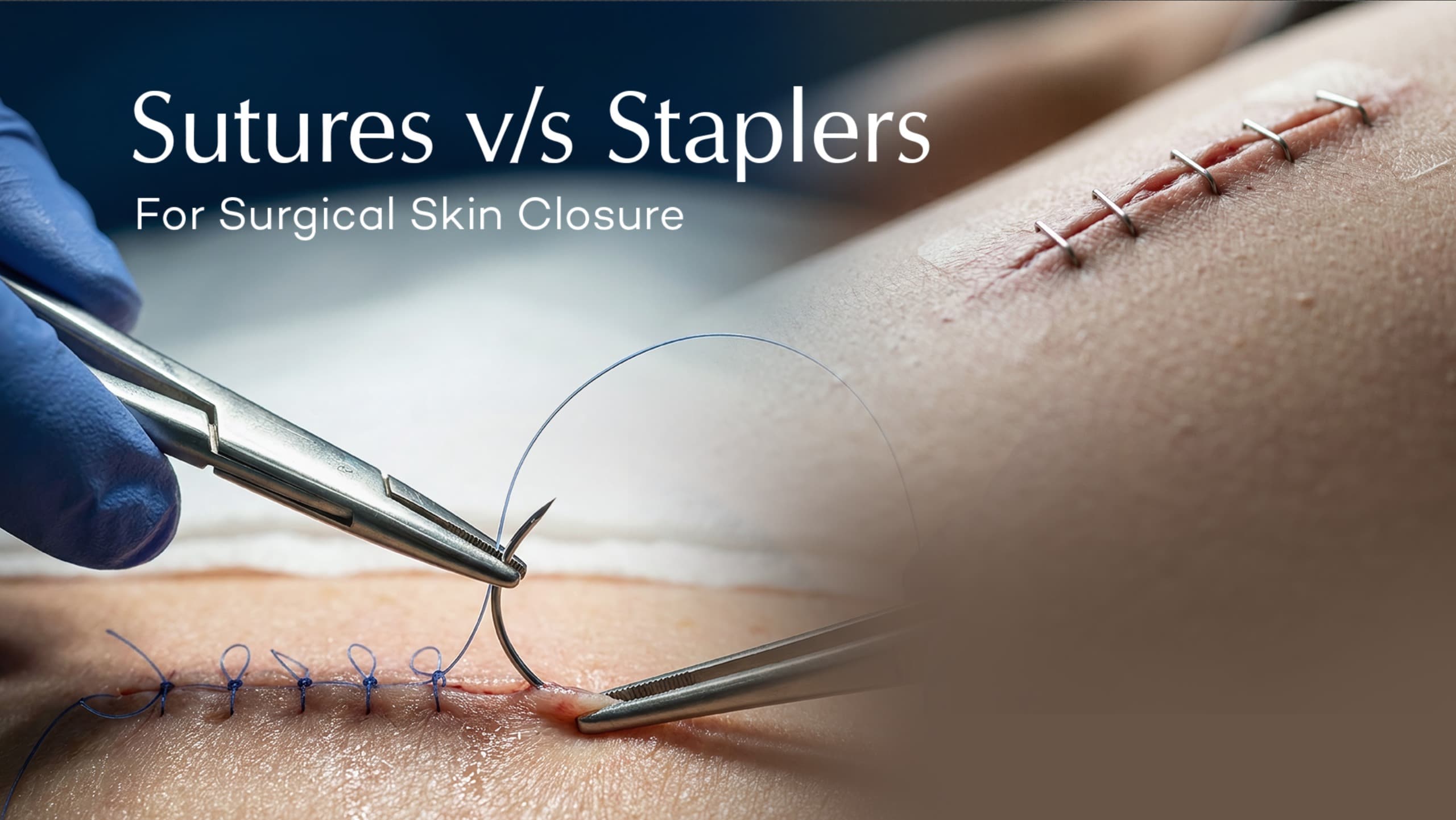
Sutures are stitches, thread-like material (sometimes absorbable, sometimes not) that a surgeon uses to sew the edges of a wound together, layer by layer.
Staples are small metal clips placed along the skin edges to hold them together. They’re applied faster using a stapling device, on the top layer of skin.
Both do the same basic job of keeping the wound edges together long enough for your body to heal and form new tissue. But how they do that job, and where they work best, is where the differences start to matter.
Speed vs. Precision
One of the biggest differences is time. Staples can be placed much faster than sutures, often in a fraction of the time. In surgeries where speed genuinely matters, whether an emergency or an elective surgery , open or a lap surgery, or long orthopedic surgeries where minimizing time under anesthesia is a priority, staples are often the practical choice.
Sutures, on the other hand, take longer but allow for more precision. A surgeon can adjust tension stitch by stitch, close multiple layers of tissue (not just the skin), and shape the closure to the exact contour of the wound. This layer-by-layer closure is especially important in areas where deeper tissue, muscle, or fascia needs to be brought together — something staples simply can’t do.
Where on the Body Matters
Location plays a bigger role in this decision than most people realize.
- Scalp, torso, limbs, orthopedic incisions: Staples are commonly used here because the skin is under less tension and the results hold up well, especially for long, straight incisions like those from a hip or knee replacement.
- Face, hands, joints, or curved areas: Sutures are usually preferred. These areas need finer control, and stitches tend to leave a less noticeable scar in visible or high-movement areas.
- Areas needing internal closure: Only sutures can close multiple tissue layers, which is essential in many abdominal or internal surgeries.
What About Scarring?
This is probably the question we get asked the most, and it’s a fair one.
Generally, sutures tend to produce a finer, less visible scar, particularly when a surgeon uses a technique that keeps the wound edges evenly aligned. Staples, because they only grip the surface and are spaced slightly apart, can sometimes leave a staple prick mark.
That said, this isn’t a hard rule. Staple technique, wound location, skin type, and how well a patient cares for the incision during healing all affect the final scar just as much as the closure method itself. A well-placed staple line and a well-placed suture line can both heal beautifully, or both heal poorly depending on aftercare.
Healing Time and Comfort
Staples are often removed sooner than non-dissolvable sutures, typically within one to two weeks, depending on the location. Removal is quick & painless.
Dissolvable sutures don’t need removal at all — they break down naturally over time. Non-dissolvable sutures do need to be taken out, though some patients describe a brief pinching sensation.
In terms of infection risk, studies have shown mixed results depending on the type of surgery, and honestly, this is where the surgeon’s experience and technique often matters more than the closure method itself.
So, Which One Is Right for You?
Here’s the truth: you don’t actually have to choose. Your surgeon will make this decision based on:
- The type and location of your surgery
- How much tension the wound will be under
- Whether deeper tissue layers need closing
- Your skin type and healing history
- Cosmetic priorities, especially for visible areas
- Time constraints during the procedure
What you can do is ask questions. If you have a preference, maybe you’re concerned about scarring, or you’ve had a bad reaction to sutures before, tell your surgical team ahead of time. Most surgeons are happy to explain their reasoning and, when medically appropriate, factor in your concerns.
A Note for Surgeons and Care Teams
While this blog is written with patients in mind, we know many clinicians read our content too, so a quick technical note: closure choice ultimately comes down to balancing wound tension, layer complexity, cosmetic outcome, and OR efficiency. Staples remain a reliable option for high-tension, low-cosmetic-priority closures where speed and security matter, while sutures continue to offer superior versatility for multi-layer and cosmetically sensitive closures. Neither method is universally “better”; the right choice is procedure-specific, and often, surgeon preference and experience play just as large a role as the clinical variables themselves.
Our Take at AMS
We manufacture both sutures and stapling products because we believe good wound care isn’t about picking a “winner”; it’s about giving surgeons the right tool for the right job. Every patient, every incision, and every surgery is a little different, and the best outcomes come from thoughtful decision-making, not a one-size-fits-all approach.
If you’re preparing for surgery, don’t hesitate to ask your surgeon how they plan to close your incision and why. Understanding the “why” behind your care can make the entire experience feel a little less intimidating, and a lot more collaborative.
This article is intended for general educational purposes and should not replace personalized medical advice. Always consult your surgeon or healthcare provider about the best wound closure method for your specific procedure.